
In the context of Non-Target Organisms (NTOs) gaining increasing relevance in the field of agricultural biotechnology, SynTech Research highlights the need to guarantee the safety and sustainability of genetically modified crops.
NTOs, organisms that are not the direct focus of genetic modifications, play crucial roles in the ecosystem and it is therefore essential to understand how innovative technologies can affect their dynamics. Assessing the impact on NTOs has become a priority for biosafety regulations, ensuring that the introduction of new technologies in agribusiness does not compromise biodiversity and environmental balance.
Focusing specifically on the Brazilian case, the assessment of NTOs is fundamental for the development and regulation of technologies with modified genetic characteristics, in accordance with the Biosafety Law
In the face of growing demand for expertise in carrying out independent studies to evaluate NTOs in genetically modified crops, SynTech Research Group stands out. With certified experimental fields and equipped laboratories, the company offers a state-of-the-art structure and has a highly qualified technical staff, led by specialists with over 12 years’ experience.
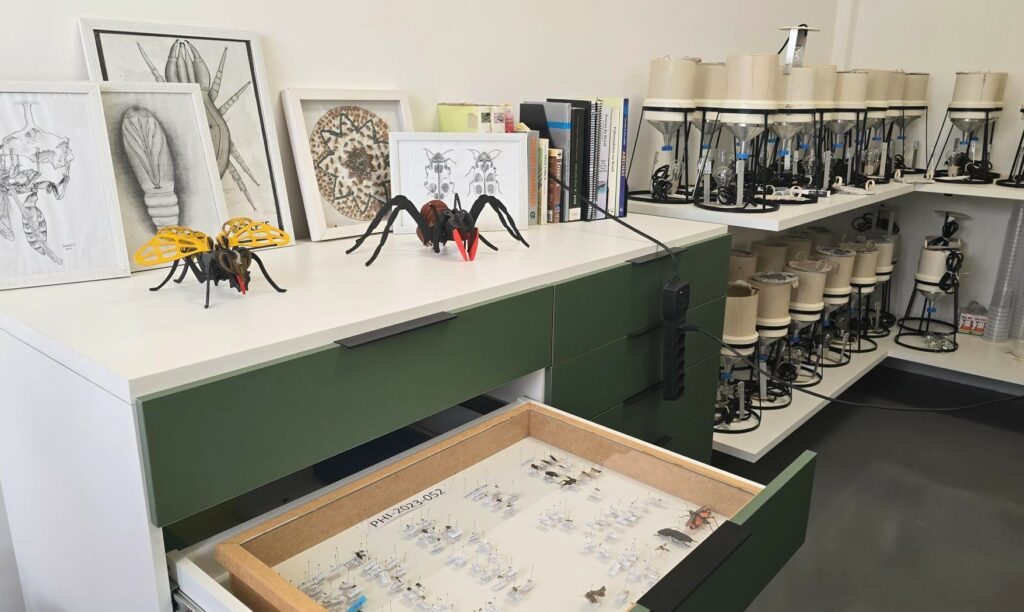
Working with NTOs involves the identification and monitoring of arthropods in different agricultural environments, using techniques such as pitfall traps for soil arthropods, sticky cards and yellow trays for aerial organisms, and active methods such as visual analysis and tapping for direct capture on plants. These methods allow for the collection of essential data to compare the communities of organisms between conventional and genetically modified plants, providing a solid scientific basis for environmental risk assessment. After capture, the organisms undergo thorough sorting, classification and identification, allowing for detailed ecological and statistical analysis. In this way, SynTech contributes to ensuring the safety and sustainability of biotechnologies, providing critical information for the implementation of practices such as integrated pest management.
Tarciso Morescalchi Bortolin, Study Director at SynTech Research in Brazil, explains that the study of Non-Target Organisms is “like a thermometer in assessing the risk of environmental impact, with this information it is possible to have a ‘north’ for the advancement of Biotechnology”, reinforcing its value.
In addition to evaluating NTOs, SynTech carries out studies on the degradability of residues, nutritional composition, the effectiveness of biotechnologies and the impact on soil microbiota, reinforcing its commitment to science, integrity and excellence in promoting safe and sustainable agricultural practices.