
SynTech France in intensive period of soil micro arthropod assessments

[et_pb_section fb_built=”1″ admin_label=”section” _builder_version=”3.22″ global_colors_info=”{}”][et_pb_row column_structure=”1_2,1_2″ admin_label=”row” _builder_version=”3.25″ background_size=”initial” background_position=”top_left” background_repeat=”repeat” global_colors_info=”{}”][et_pb_column type=”1_2″ _builder_version=”3.25″ custom_padding=”|||” global_colors_info=”{}” custom_padding__hover=”|||”][et_pb_text _builder_version=”4.10.8″ _module_preset=”default” global_colors_info=”{}”]

Our ecotoxicology teams in France are now in full swing extracting microarthropods from soil microfauna field studies. Trials were started in early Spring and we are now engaged in the 6-month assessments.

Soil-dwelling mites, collembola and other soil microarthropods play an important role in litter decomposition. In-crop and off-crop field studies on natural populations evaluate the effects of plant protection products on these non-target arthropods.

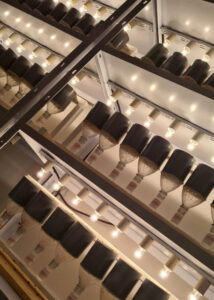
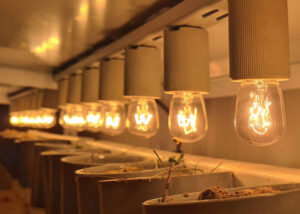
Soil core samples are made at 1, 3, 6 and 12 months after application. Microarthropods are extracted from the soil in Berlese (Tulgren) funnel apparatus. This involves a desiccation gradient; mobile organisms move from the dry environment and fall into collecting vessels for counting and species identification. Soil microarthropod field studies are usually combined with earthworm field studies.

This it is the right time to book study slots for soil organism testing or any other higher tier testing needs in Spring 2022; contact eythier@syntechresearch.com for more information on:

  • Honey bee brood semi-field and field studies (treated crop or feeding exposure)
  • Solitary bee and bumble bee semi-field and field studies
  • Pollinator residues studies (pollen, nectar, honey and other bee matrices)
  • NTA aged residue and semi-field studies – NTA in-crop and off-crop field studies
  • Predatory mite field studies
  • Residue studies in arthropods
  • Earthworm field studies
  • Soil microfauna field studies
  • Residue studies in soil organisms
  • Monitoring studies on pollinators, arthropods and soil organisms

[/et_pb_text][/et_pb_column][et_pb_column type=”1_2″ _builder_version=”3.25″ custom_padding=”|||” global_colors_info=”{}” custom_padding__hover=”|||”][et_pb_blurb _builder_version=”4.10.8″ _module_preset=”default” global_colors_info=”{}”]
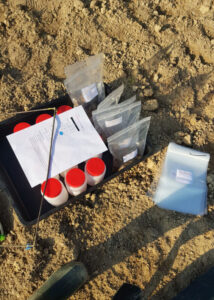
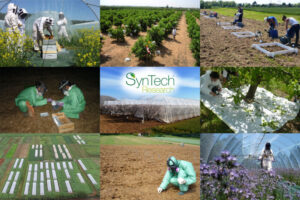
Collection of soil samples in the field
[/et_pb_blurb][et_pb_blurb _builder_version=”4.10.8″ _module_preset=”default” global_colors_info=”{}”]
Collection of microarthropods from soil samples using Berlese extraction method
[/et_pb_blurb][et_pb_blurb _builder_version=”4.10.8″ _module_preset=”default” global_colors_info=”{}”]
Berlese funnel units
[/et_pb_blurb][/et_pb_column][/et_pb_row][et_pb_row column_structure=”1_3,1_3,1_3″ _builder_version=”4.10.8″ _module_preset=”default” global_colors_info=”{}”][et_pb_column type=”1_3″ _builder_version=”4.10.8″ _module_preset=”default” global_colors_info=”{}”][et_pb_blurb _builder_version=”4.10.8″ _module_preset=”default” global_colors_info=”{}”]
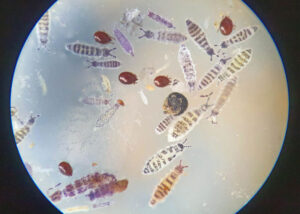
Collembolan and Oribatida mites collected from one soil sample
[/et_pb_blurb][/et_pb_column][et_pb_column type=”1_3″ _builder_version=”4.10.8″ _module_preset=”default” global_colors_info=”{}”][et_pb_blurb _builder_version=”4.10.8″ _module_preset=”default” global_colors_info=”{}”]
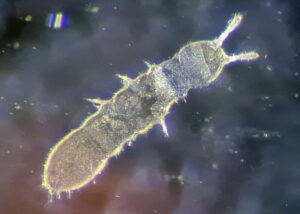
Collembolan (Folsomia quadrioculata (Tullberg, 1871)) mounted in lactophenol on microscope slide for identification
[/et_pb_blurb][/et_pb_column][et_pb_column type=”1_3″ _builder_version=”4.10.8″ _module_preset=”default” global_colors_info=”{}”][et_pb_blurb _builder_version=”4.10.8″ _module_preset=”default” global_colors_info=”{}”]
Pollinator, NTA and soil higher tier studies performed at SynTech
[/et_pb_blurb][/et_pb_column][/et_pb_row][/et_pb_section]

Other related posts

Anses Updates National Bee Protection Requirements in France: What PPP Authorization Holders Need to Know in 2026

The Agence nationale de sécurité sanitaire (Anses) has published Version 5 of its Information Note on the national provisions for the protection of bees and other pollinating insects, updated as of July 1st 2026. The... read more

Anses Clarifies Implementation of EU Regulation 2026/1120 on Newly Prohibited Co-formulants in France

On 27 May 2026, the European Commission published Regulation (EU) 2026/1120, amending Annex III of Regulation (EC) No 1107/2009 by adding 12 co-formulants that can no longer be accepted in plant protection products. The regulation... read more

Good Place to Work – Interviewing Beatriz Blanco

We are excited to feature Beatriz Blanco, an indispensable member of SynTech Research Group, based in Mexico City, Mexico. In this interview, Beatriz shares insights into her role, motivations and experiences working at SynTech Research... read more

EPA Launches $30 Million Challenge to Help American Farmers Grow Healthy Food

On July 1st 2026, the U.S. Environmental Protection Agency (EPA), announced a national innovation challenge with up to $30 million in total prize funding. The challenge will support practical, cost-effective alternatives to conventional chemical crop... read more

Reliable Agricultural Research backed by established SOPs

At SynTech Research, we deliver high-quality agricultural research supported by established Standard Operating Procedures (SOPs) that ensure consistency, accuracy, and reliability across all laboratory and greenhouse studies. The Global Early-Stage Screening Committee (GESC) combines experienced... read more

SynTech Research highlights new rules on New Genomic Techniques to boost innovation in sustainable agriculture

On June 17th 2026, the European Parliament has adopted the new Regulation on New Genomic Techniques (NGTs), providing Europe with a modern framework for plant breeding innovation. The framework marks a significant turning point for... read more