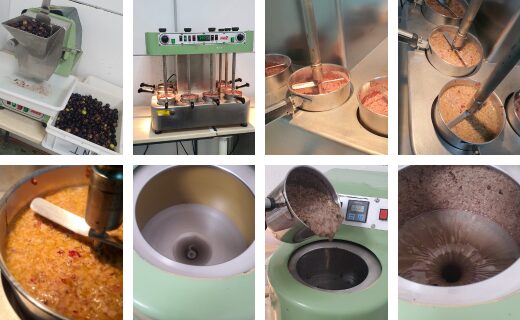
At SynTech Research Group, we are continually exploring innovative methods and processes to ensure the highest quality of olive oil production. In a recent venture, our team embarked on a journey to extract and evaluate olive oil while using the ABENCOR method. Our experiments, conducted at our facility in Sevilla, Bollullos, were focused on the extraction of olive oil for the determination of residues in this liquid gold. In this blog post, we will take you through the various stages of the olive oil extraction process and highlight the importance of this endeavour.
The ABENCOR Method:
The ABENCOR method is based on a classical and widely used industrial process for olive oil extraction, mimicking the principal steps on a laboratory scale. This method employs essential equipment to carry out the extraction effectively.
1. Milling Equipment:
- A stainless steel hammer mill with a 2 HP engine, operating at 3000 rpm.
- Different screens are used to control the size of milling.
- The milling mixture is collected in a tray.
2. Thermo-Mixer:
- Capable of mixing in 8 jars simultaneously.
- The jars are submerged in a hot bath with temperature control via a thermostat.
- A mechanical engine rotates 8 mixer palettes at 50 rpm.
- All components that come into contact with the product are made of stainless steel.
3. Centrifuge:
- A nest-type centrifuge, constructed with a stainless steel bowl spinning at 3500 rpm.
- The bowl contains an exit hole for the separated oil.
The Extraction Process:
Our journey begins with the collection of olive samples and the initiation of the ABENCOR method. Here’s a glimpse of each step along the way:
- Milling: The olive fruits undergo a milling process, resulting in the formation of a paste suitable for centrifugation.
- Weighing and Preparation: The paste is weighed, and microtalc is added, preparing it for the thermo-mixer.
- Thermo-Mixing: The paste is subjected to thermo-mixing in the specially designed equipment, ensuring proper mixing and temperature control.
- Introduction into the Centrifuge: The paste is introduced into the centrifuge, where it is separated into oil and other components, and then collected.
- Decantation of Oil: The collected oil undergoes decantation to further separate any remaining impurities.
- Final Result – Extra Virgin Olive Oil: The end of the process reveals the glorious result – high-quality Extra Virgin Olive Oil.
In SynTech we can carry out refined olive oil, and it should be processed from the raw oil (virgin oil + sediments) by addition of soda solution and heating according to following steps:
- Prepare a solution of 115 g/L of NaOH on 1 litre of water.
- Add 300 ml of this SODA solution by litre of raw oil and keep mixture at 60-70ºC for at least 30 minutes.
- Keep the mixture floating up to reaching the separation of soap and raw refined oil.
- Filter the sample with a filter to obtain a clean and filtered final sample of refined olive oil.
Our dedication to the research that we continue to provide the finest products to our clients. We take immense pride in our work at the SynTech Research Group, where we are committed to advancing the industry through innovative research and technology. We invite you to follow our journey so stay tuned for more updates and insights from SynTech Research Group!